




Washing Machine Installation in UAE: Setup Tips
Have you ever wondered how the right setup can transform your laundry experience? In the bustling cities of Dubai, Abu Dhabi, and beyond, the importance of proper appliance installation cannot be overstated. Whether it’s a new washer or a replacement, understanding the installation process can save you time and frustration.
A proper washing machine setup involves much more than simply placing the appliance in position. Water connections, drainage, transit-bolt removal, floor stability, leveling, electrical requirements, and final testing can all affect how safely and reliably the machine operates.
Samsung Gulf’s current installation guidance specifically highlights water connections, transit-bolt removal, drain-hose setup, leveling, and calibration as important installation steps.
For homeowners who already have an appliance experiencing performance problems, Super Fix Appliances provides appliance repair support in Dubai, including washing-machine servicing.
In this article, we will explore the installation process, water and drainage connections, leveling, testing, model-specific considerations, and the practical checks that can help make your laundry setup smoother and more reliable.
Key Takeaways
- Proper installation helps reduce leaks, vibration, drainage problems, and unnecessary noise.
- Transit bolts must be removed according to the appliance manual before normal operation.
- Water and drain hoses should be connected securely without kinks.
- A washing machine should stand on a firm, stable, level surface.
- Drain-hose requirements vary by manufacturer and model.
- Front-load and top-load machines have different clearance requirements.
- A final leak and operation check should be completed before normal use.
- Follow the exact installation manual for your appliance rather than relying on universal measurements.
Overview of Washing Machine Installation in the UAE
Understanding the different parts of an appliance setup can greatly improve the installation experience.
A normal washing-machine installation may involve:
- Positioning the appliance
- Removing shipping or transit bolts where applicable
- Connecting the water supply
- Routing the drainage hose
- Checking electrical access
- Leveling the unit
- Checking door or lid clearance
- Testing water intake and drainage
- Running an initial calibration or test program where specified
- Explaining basic controls to the user
Samsung Gulf’s June 2026 installation guidance states that incorrect installation can contribute to leaks, excessive vibration, spinning problems, and drainage faults.
Different properties can also require different planning. Apartments may have restricted laundry spaces, while villas may provide larger utility areas but still require suitable plumbing, drainage, and electrical connections.
Washing Machine Installation: What a Proper Setup Includes
An effective installation can transform your laundry experience significantly.
Both top-load and front-load machines need secure positioning and correct connections, but their space requirements are different.
Front-load units need enough room for the door to open comfortably. Top-load models need sufficient clearance above the appliance for the lid.
Fully automatic and semi-automatic models can also have different water and drainage requirements.
Remove Transit Bolts
This is one of the most important installation steps for many front-load washers.
Transit bolts secure the drum during transport. They must be removed before normal operation according to the manufacturer's instructions.
Samsung Gulf specifically warns that failing to remove transit bolts can cause excessive noise and vibration.
Siemens UAE similarly identifies transport bolts that have not been removed as a common cause of washing-machine vibration and movement.
Keep the removed bolts if the manufacturer recommends doing so, because they may be required if the washing machine is transported again.
Complete a Final Test
After installation, check:
- Water intake
- Hose connections
- Drainage
- Leaks
- Excessive movement
- Error codes
- Door or lid operation
Some machines also require a manufacturer-specific calibration cycle after installation.
If a machine begins struggling to spin after installation, the previous Super Fix guide How to Repair Washing Machine Not Spinning explains how leveling, load balance, drainage, and mechanical faults can affect the spin cycle.
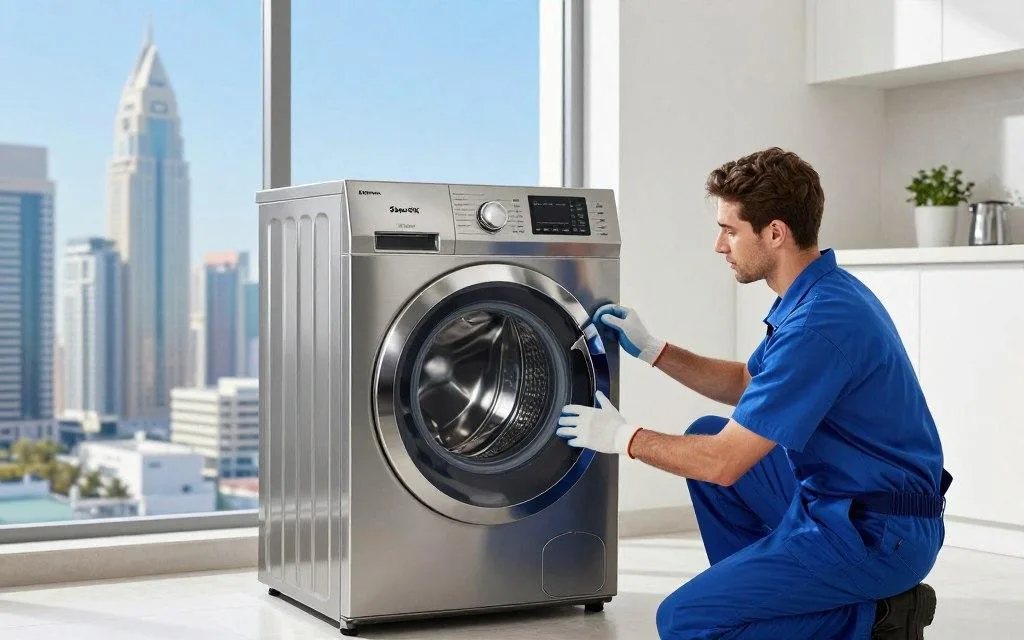
The Installation Process and Scheduling
A smooth setup starts before the washing machine arrives.
Step 1: Prepare the Installation Area
Before delivery:
- Measure the installation space.
- Confirm the delivery path.
- Check doorways, lifts, stairs, and hallways.
- Make sure a suitable water supply and drainage point are available.
- Confirm electrical access.
- Remove obstacles from the installation area.
LG UAE specifically recommends checking both the installation space and delivery route before purchasing or reinstalling a washer.
Step 2: Position and Connect the Washer
After unpacking:
- Position the washing machine on a stable floor.
- Remove transit bolts where applicable.
- Connect the correct inlet hose.
- Route the drain hose according to the model instructions.
- Make sure hoses are not twisted, crushed, or kinked.
- Level the washing machine.
Step 3: Test the Installation
Before regular use:
- Turn on the water supply.
- Check inlet connections for leaks.
- Check drainage.
- Confirm the appliance remains stable.
- Run the manufacturer-required test or calibration procedure.
- Watch for unusual vibration, noise, or error codes.
| Step | Main Check |
|---|---|
| 1. Prepare | Space, connections, delivery route |
| 2. Position | Stable and level floor |
| 3. Connect | Water, drain and power requirements |
| 4. Inspect | No kinks, leaks or loose fittings |
| 5. Test | Fill, drain, spin and calibration where required |
Comprehensive Setup: Water, Drainage, and Connections
Proper water and drainage connections are crucial.
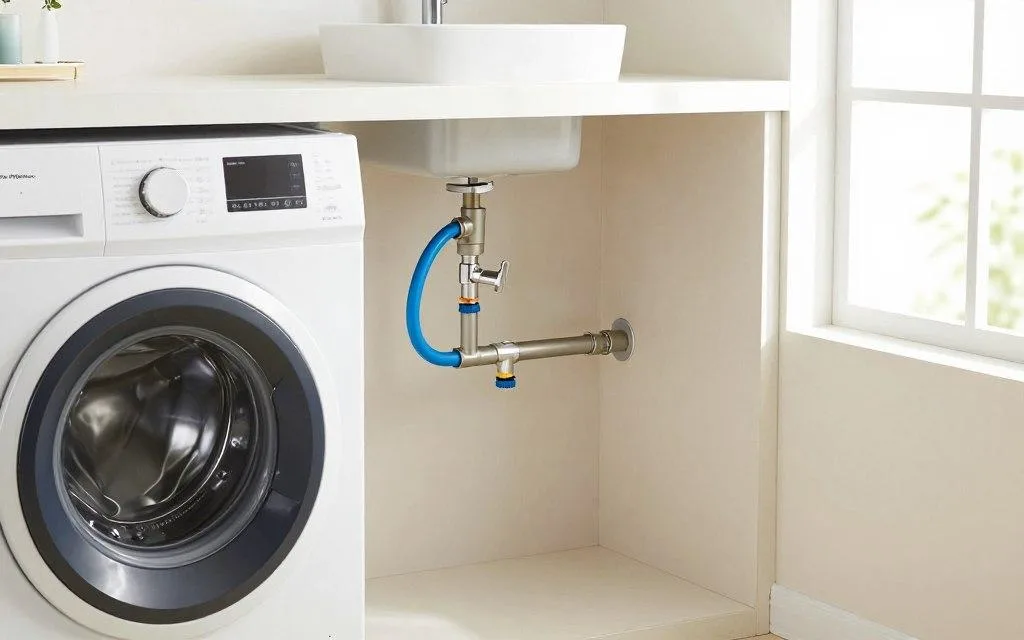
Water Supply
The inlet hose should be attached securely to the correct water connection.
Samsung Gulf recommends using secure water-hose connections and checking for leaks after turning the tap on.
LG UAE also warns that incorrectly routed or bent supply hoses can cause water-supply errors.
Do not force incompatible fittings or improvise connections.
Drain Hose
Drain-hose placement is model-specific.
Do not publish one universal height for every washing machine.
For example, Samsung provides particular drain-hose height requirements depending on whether the hose connects to a basin, standpipe, or sink waste.
LG's guidance likewise differs according to washer and drainage design.
The important general rules are:
- Do not kink the hose.
- Do not crush it behind the appliance.
- Secure it correctly.
- Avoid arrangements that can cause backflow or siphoning.
- Follow the exact manual for hose height and insertion depth.
| Component | Installation Check |
|---|---|
| Water inlet | Secure connection with no leakage |
| Drain hose | Correct routing, height and support |
| Floor | Hard, stable and level |
| Electrical supply | Follow appliance requirements |
| Test cycle | Confirm filling, draining and stable operation |
Why Leveling and Transit-Bolt Removal Matter
A washing machine can look properly installed while still being slightly unstable.
That small installation error becomes much more noticeable when the drum reaches high spin speeds.
Siemens UAE identifies three major causes of excessive movement:
- Unsuitable installation surface
- Washing machine not level
- Transportation bolts not removed
LG UAE also states that an uneven installation can produce rocking and vibration during spinning.
Place the machine on a hard, stable floor and adjust the feet according to the manufacturer’s instructions.
After leveling, the washer should not rock when pressure is applied gently to opposite corners.
Do not place random pieces of wood, cardboard, or improvised packing beneath the appliance to compensate for a poor floor.
Installation Considerations Across UAE Homes
The original draft listed individual DG Help and third-party service areas throughout Dubai, Abu Dhabi, Al Ain, Sharjah, and Ajman. Because those are competitor service claims, I would not publish them on the Super Fix blog.
For a UAE-focused installation guide, the more useful consideration is the type of property.
Apartments
Check:
- Lift dimensions
- Building access
- Narrow corridors
- Utility cupboard dimensions
- Drain location
- Water connection
- Door-opening clearance
Villas
Check:
- Laundry-room floor stability
- Hose distances
- Drainage
- Electrical connection
- Ventilation around adjacent appliances
Kitchens and Utility Areas
Confirm that cabinetry does not:
- Pinch the inlet hose
- Crush the drain hose
- Prevent servicing access
- Block the door
- Force the appliance out of level
LG UAE’s current installation checklist specifically emphasizes measuring the installation location and delivery route before the appliance is delivered.
Cost Transparency and What Can Affect Installation Price
Installation cost cannot be accurately represented by one fixed number because requirements vary.
Price can be affected by:
- Appliance type
- Front-load vs top-load design
- Existing plumbing
- Drain location
- Hose or fitting requirements
- Difficult access
- Cabinet modifications
- Electrical work
- Removal of an old appliance
- Additional plumbing work
A basic installation where all connections already exist is very different from a property requiring new plumbing or electrical work.
For that reason, confirm exactly what is included before approving an installation quote.
Avoid assuming that delivery automatically includes installation.
What Good Installation Service Should Include
Instead of publishing competitor testimonials from Anouska, Ian Steer, and Ismail, I recommend keeping the same section intent while focusing on what the reader should evaluate. The original testimonials and DG Help demonstration claims appear in the source draft.
A good installation experience should include:
- Clear communication before arrival
- Correct positioning
- Secure water connections
- Correct drain-hose routing
- Transit-bolt removal
- Leveling
- Leak inspection
- Test operation
- Clean work area
- Basic operating guidance
- Clear explanation of any work not included
The technician should also follow the specific manufacturer's installation instructions rather than relying on the same setup method for every brand.
Specialized Installation for Different Washing Machine Models
Different machines require different installation approaches.
Fully Automatic vs Semi-Automatic Machines
Fully automatic washers generally require permanent or semi-permanent water and drainage connections.
Semi-automatic washers may use different filling and drainage arrangements depending on their design.
Follow the model manual.
Top Load vs Front Load
Top-load units require sufficient clearance above the appliance.
Front-load models need enough space in front for the door to open and for users to load and unload laundry comfortably.
Built-In or Tight-Space Installations
Where a washing machine is installed under a counter or within cabinetry:
- Verify clearances.
- Prevent hose compression.
- Leave servicing access.
- Check door movement.
- Follow ventilation requirements.
Samsung, LG, Bosch, Siemens and other manufacturers can have different clearance and drainage requirements, so use the documentation for the exact model number.
Utilizing Quality Tools and Installation Materials
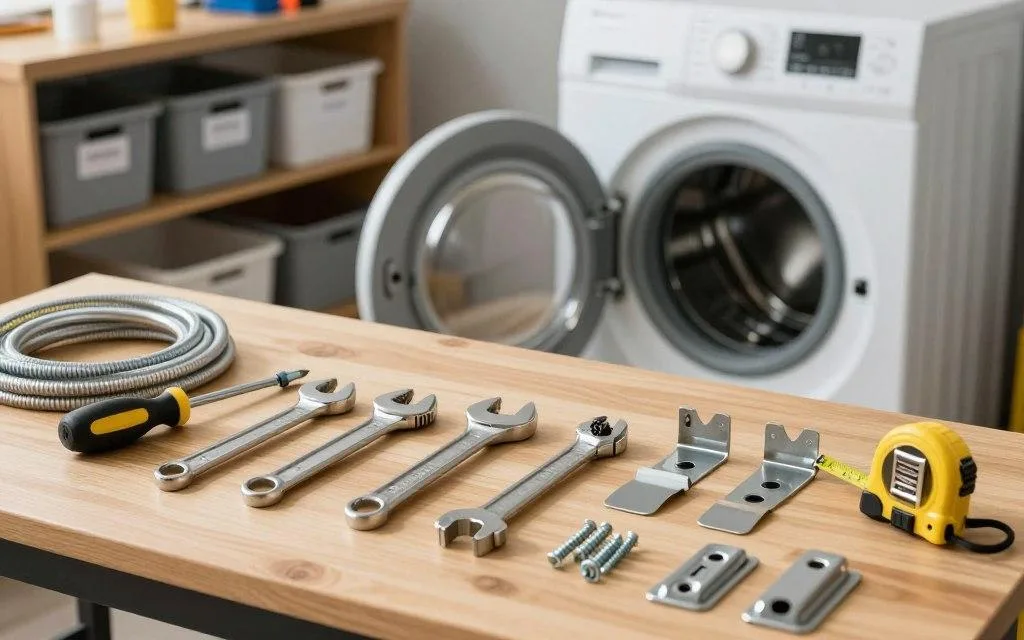
Quality tools and compatible fittings support a more reliable setup.
Typical installation equipment may include:
- Spirit level
- Correct spanners or wrenches
- Screwdrivers
- Manufacturer-supplied hoses
- Hose guides
- Appropriate clamps
- Measuring tape
Avoid improvised fittings or incorrect adapters that can create leaks.
Hoses, clamps, brackets, and connectors should match the appliance and household plumbing.
Manufacturer-supplied installation parts should generally be used where specified.
One particularly important tool is the spirit level. Proper leveling helps minimize unnecessary vibration during high-speed spinning.
After Installation: Maintenance and Repair Support
The installation is only the beginning of appliance ownership.
Basic ongoing care includes:
- Inspecting hoses periodically
- Watching for leaks
- Cleaning user-serviceable filters
- Keeping the washer level
- Using the correct detergent
- Following drum-clean or maintenance programs
- Investigating new vibration or drainage symptoms early
If the washing machine later develops spinning problems, you can also read Is Your Washing Machine Not Spinning? Troubleshooting Tips.
For faults involving drainage, motors, belts, sensors, drum problems or electronics, Washing Machine Repair Dubai is the most relevant current Super Fix commercial page. The live Super Fix site lists washing-machine repairs among its Dubai appliance services.
Preparing for Your Washing Machine Installation
Before the appliance or technician arrives:
- Clear the installation area.
- Confirm the appliance dimensions.
- Check the delivery route.
- Make sure water and drainage points are accessible.
- Confirm a suitable electrical supply.
- Keep the appliance model number and installation manual available.
- Check whether additional plumbing or electrical work is required in advance.
Do not discard transit bolts after removal if the manufacturer tells you to retain them.
They may be needed when moving the washer to another property.
Conclusion
A well-planned washing machine installation in UAE can significantly improve appliance stability, drainage, and everyday performance.
The essential steps include preparing the installation area, removing transit bolts where required, connecting the water supply securely, routing the drain hose correctly, leveling the washer, and completing a final test.
Manufacturer instructions matter because clearances, hose heights, calibration procedures, and connection requirements vary between models.
Improper installation can contribute to leaks, excessive movement, noise, drainage problems, and poor spinning performance.
For that reason, avoid universal measurements or improvised installation methods when the model manual provides specific requirements.
Once the washer is installed correctly, regular hose checks, filter maintenance, correct loading, and proper detergent use can help maintain reliable performance.
For existing washing machines requiring diagnosis or repair in Dubai, Super Fix Appliances provides appliance repair support.
Frequently Asked Questions
What services are normally included in washing machine installation?
A standard setup commonly includes positioning, transit-bolt removal where required, connecting the water supply, arranging drainage, leveling, and initial testing.
Exact services vary by provider and appliance.
How do I prepare for washing machine installation?
Clear the installation space, measure the area and delivery path, confirm water and drainage access, check electrical requirements, and keep the appliance manual available.
Are there additional costs for installation?
There can be.
Additional plumbing, electrical work, special fittings, difficult access, old-appliance removal, cabinetry modifications, or replacement hoses can affect the final price.
What types of washing machines can be installed?
Installation requirements differ between:
- Front-load washers
- Top-load washers
- Fully automatic machines
- Semi-automatic machines
- Integrated or built-in units
Always follow the exact model documentation.
How long does washing machine installation take?
There is no universal duration.
A straightforward replacement using existing connections can be relatively quick, while new plumbing, electrical changes, access issues, or cabinetry work can make the job considerably longer.
What happens if the washing machine is not level?
An unlevel washer can vibrate, move, make additional noise, and struggle during high-speed spinning.
LG UAE and Siemens UAE both identify correct leveling as important for stable washing-machine operation.
Do transit bolts need to be removed?
On washing machines fitted with shipping or transit bolts, yes.
Follow the model's instructions. Failure to remove them can lead to severe vibration and noise.
Should I run the washing machine after installation?
Yes, where the manufacturer instructs it.
Run the specified test, calibration, drum-clean, or initial cycle to check water intake, drainage, leaks, stability, and operation.
Can I request maintenance or repair after installation?
Yes. Installation and repair are separate services.
If an existing machine develops a fault in Dubai, Super Fix currently offers washing-machine repair through its appliance service network.