




How to Repair Washing Machine Not Spinning
Many people assume that a washing machine will always spin effectively. However, this isn't always the case. Have you ever wondered why your appliance might suddenly stop performing its spin cycle? The truth is, there are several reasons that can cause this issue.
Overloading the drum is a common culprit. When too many items are packed in, it can lead to an unbalanced load, preventing the machine from spinning properly. Additionally, a blocked drain pump can stop the washer from transitioning into the spin cycle, leaving your laundry damp.
In this article, we will explore a systematic troubleshooting process. You'll learn about essential checks, including the lid switch, door lock, and drain pump. Understanding these components can help distinguish between simple adjustments and more complex repairs.
Before inspecting any part of your washer, always remember to disconnect the power and water supply. This ensures safety while you troubleshoot the issue.
Key Takeaways
- Overloading can disrupt the spin cycle by unbalancing the drum.
- A blocked drain pump may prevent the washer from spinning.
- Regular cleaning of drain pump filters is recommended according to your model's maintenance instructions.
- Identifying simple fixes can save time and effort.
- Always disconnect power and water before inspecting your appliance.
Introduction to Washing Machine Spin Issues
A washing machine's ability to spin can be unexpectedly compromised. Various factors contribute to this malfunction, which can leave laundry damp and unclean. Understanding these issues is essential for effective troubleshooting.
Common malfunctions include an unbalanced load, a faulty lid switch, or a damaged belt. Each of these can halt the spin cycle. Samsung's current guidance confirms that overloading, unbalanced loads, clogged debris filters, drainage issues, and motor problems can all contribute to a washer that will not spin. See Samsung Gulf's official washing machine not spinning guide.
| Issue | Symptoms | Possible Causes |
|---|---|---|
| Unbalanced Load | Pausing or failing to reach full spin | Too many items or uneven distribution |
| Faulty Lid Switch | Will not spin | Worn, damaged, or misaligned switch |
| Blocked Drain Pump | Standing water | Debris, lint, or drainage blockage |
In diagnosing the problem, users should consider distinct clues. These include a silent motor, a burning smell, or grinding noises. A washer can complete washing and rinsing cycles but may refuse to start high-speed spinning.
“Understanding the symptoms is the first step toward effective troubleshooting.”
Why Washing Machines Fail to Spin
Washing machines can sometimes fail to complete their spin cycles effectively. One of the primary reasons for this issue is overloading the drum. When too many items are packed inside, it creates an unbalanced load. This imbalance can trigger the washer's protection mechanism, preventing it from spinning.
To address this, users can remove a few items and redistribute the remaining clothes evenly. This simple adjustment often restores normal operation without the need for any repairs.
Common examples of heavy loads include towels, blankets, and mixed fabric items, which require careful distribution.
It is crucial to follow the manufacturer's guidelines regarding capacity. Overfilling the drum can lead to temporary overload symptoms. However, if the problem persists after correcting the load, it may indicate a more serious mechanical failure.
For broader Dubai-specific washer problems beyond the spin cycle, see The Washing Machine Problems Every Dubai Household Eventually Faces.
Understanding the Spin Cycle Mechanics
The mechanics behind a washing machine's spin cycle can be intricate. Each component plays a vital role in ensuring that laundry comes out properly spun. The motor, for instance, is essential for transferring rotational force to the drum.
This process can involve several parts, including the belt, coupling, clutch, and pulley, depending on the washer design. If one of these components fails, the drum may not spin properly.
A burned-out or failing motor may produce little sound, unusual noise, or even a burning smell, indicating a potentially serious issue.
Some modern washers also use sensors and control logic to reduce or stop spinning when an unsafe imbalance is detected. This protects the appliance from excessive vibration or mechanical strain.
Understanding these mechanics is crucial. If one link in the system fails, the entire spin cycle can be disrupted, leaving clothes damp after washing.
Preparing for Repairs: Safety and Essential Tools
Before diving into any repairs, it's crucial to ensure a safe working environment. This involves disconnecting the power supply and closing the water connections. Keeping hands away from moving parts is essential to avoid injuries.
Gathering the right tools can make basic inspection easier. A toolkit may include:
- Screwdriver set
- Nut drivers
- Pliers
- Multimeter for appropriate de-energized testing by someone who knows how to use it
- Flashlight
- Protective gloves
- Towels
- Shallow container
Additionally, taking photographs of wire connections before any permitted disassembly can aid in accurate reassembly. Protective gloves help prevent cuts from sharp edges, while towels can absorb residual water from hoses and pumps.
Important: If diagnosis requires live electrical measurements, energized testing, control-board voltage checks, or work around exposed wiring, stop and use a qualified technician. Those procedures should not be treated as routine DIY troubleshooting.
How to Repair Washing Machine Not Spinning: Step-by-Step Guide
Washing machines are essential appliances, but they can face operational challenges. This guide provides a systematic approach to diagnosing and addressing issues effectively. Starting with simple checks can save time and effort.
First, ensure safety by disconnecting the power supply. This step is crucial before inspecting any components.
Next:
- Confirm the selected wash or spin cycle.
- Make sure the door or lid closes securely.
- Check whether the load is overloaded or badly unbalanced.
- Look for standing water in the drum.
- Check accessible external drain hoses for kinks or restrictions.
- Inspect user-serviceable filters according to the appliance manual.
- Stop if the fault appears to involve wiring, the motor, control board, transmission, or other complex internal components.
It's important to ensure that any replacement parts match the specific model number of the appliance. This includes belts, switches, and couplings because these components are not universally interchangeable.
If basic checks indicate a more complex malfunction, consider professional diagnosis instead of continuing disassembly.
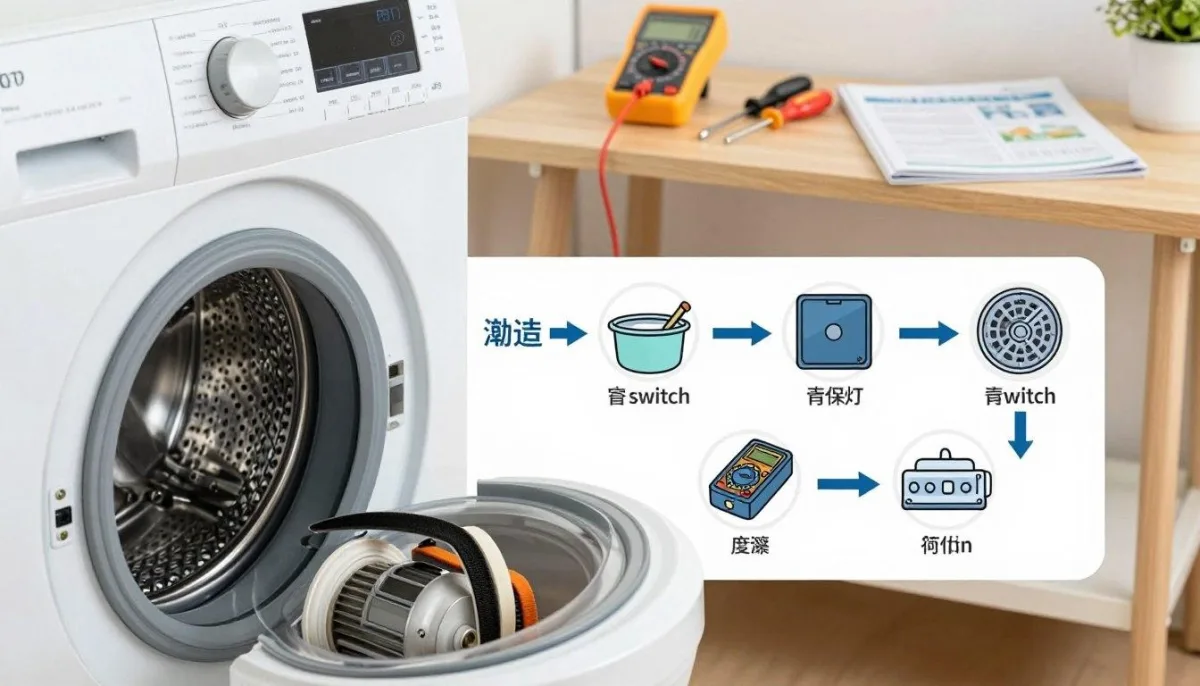
Checking the Lid Switch and Door Lock Functionality
A malfunctioning lid switch can disrupt the spin cycle of a top-load washer. This component is crucial because it ensures that the machine only operates when the lid is securely closed. If the lid switch is loose, damaged, or misaligned, it may prevent the washer from spinning altogether.
In front-load washers, the door lock serves a similar purpose. If the door lock cannot confirm that the door is closed, the spin cycle will not engage. This is a safety feature designed to protect users from injury.
Start by disconnecting the appliance from power and checking for obvious visible damage, debris, or misalignment around the latch or switch area.
A cracked switch, damaged wiring, or failed door-lock assembly may require replacement.
Never bypass a lid switch or door-lock safety system. Doing so can create a serious injury risk by allowing the appliance to operate without the intended safety protection.
Repair cost varies according to the washer model, replacement part, accessibility, and local labor charges, so a model-specific quote is more useful than a generic international price range.
Inspecting the Drive Belt for Signs of Damage
Inspecting the drive belt can be useful when diagnosing spin-related problems on washer models that use a belt-drive system.
A slipping or broken drive belt can cause squealing, grinding, clicking, or a drum that fails to rotate normally.
Before accessing any panel, disconnect the washing machine from power and water. If the model's user or service documentation permits safe access, inspect the belt for:
- Cracks
- Stretching
- Fraying
- Misalignment
- Complete separation
If squealing or grinding occurs during spinning, belt slippage or pulley misalignment may be involved.
It's also important to inspect accessible pulleys for obvious obstructions or damage before fitting the correct model-specific belt.
Because access requirements vary significantly between washer designs, deeper belt or pulley replacement should be left to a technician if substantial disassembly is required.
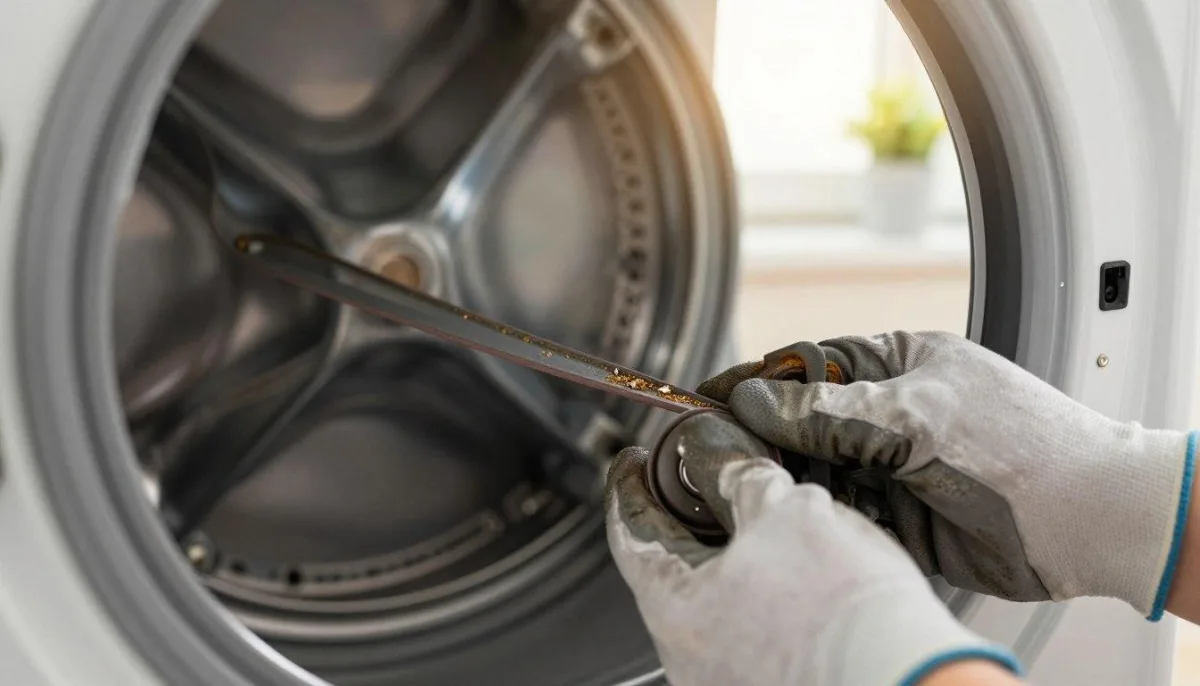
Assessing Motor Coupling and Clutch Wear
Understanding the role of motor coupling and clutch wear is vital for diagnosing spin issues.
A broken motor coupling can prevent the drum from spinning and may require replacement. Similarly, a worn clutch can hinder proper drum rotation, depending on the washer's design.
These components can sometimes cause a washer to fill and agitate but fail to spin. A failing motor may create no sound, unusual sounds, or a burning smell, signaling the need for professional confirmation before a replacement part is ordered.
For those experienced in appliance repair, replacing an accessible model-specific coupling may be manageable. However, clutch and motor work often requires deeper disassembly, making it more complex.
- A damaged motor coupling may require replacement.
- Seek professional help if inspection suggests damaged wiring or transmission failure.
- Severe overheating or repeated breakdowns also warrant expert assistance.
- Motor diagnosis should be confirmed before an expensive replacement is ordered.
Diagnosing Control Board and Timer Malfunctions
When timers malfunction, they can prevent the washing process from advancing to the spin cycle. This issue may leave the washer appearing stuck in an earlier phase.
Symptoms of a faulty control board can include inconsistent cycle selection and unresponsive controls.
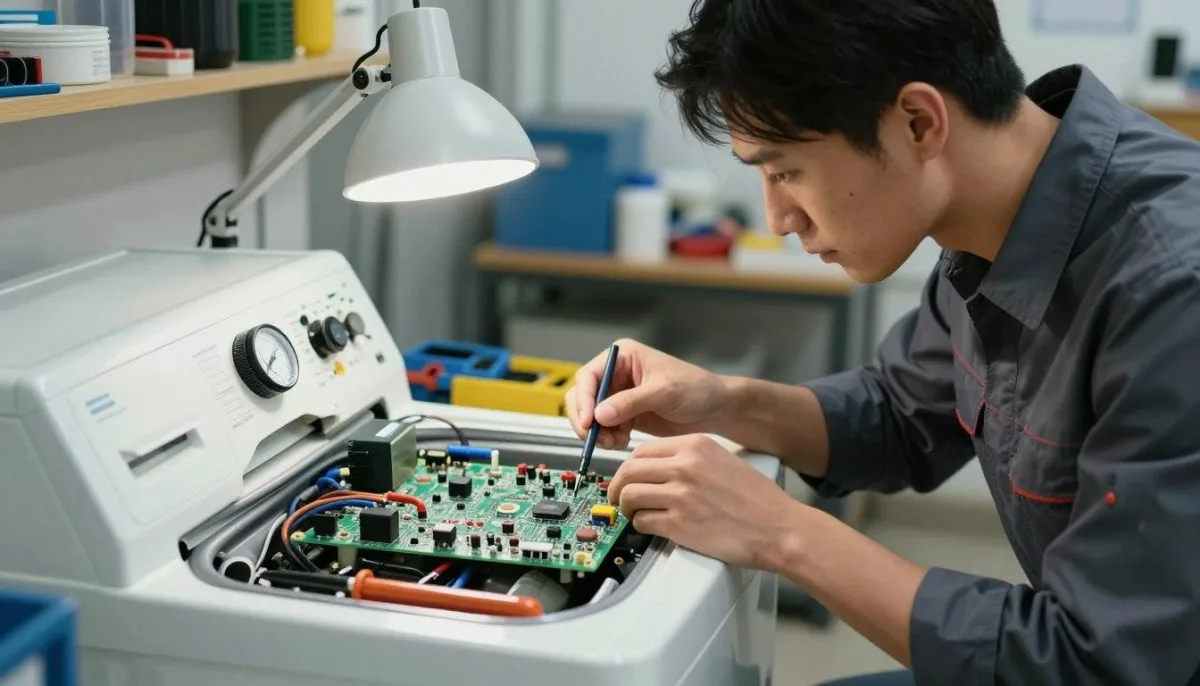
After unplugging the appliance, visible connectors can be checked for obvious damage where safely accessible. Avoid unnecessary handling of electronic boards.
Electronic diagnosis often requires model-specific schematics, specialized knowledge, and voltage testing.
Before replacing an expensive control board based solely on a general symptom, seeking professional assessment is advisable. This helps ensure that the underlying issue is accurately identified instead of replacing a working board unnecessarily.
Addressing Drainage Issues and Pump Blockages
Drainage problems can significantly hinder a washer's ability to perform its spin cycle.
When water remains in the drum, the appliance may prevent or delay high-speed spinning. This can prolong the washing process and leave clothes unusually wet.
To check for basic drainage issues:
- Inspect the drain hose for kinks or crushed sections.
- Look for obvious obstructions in accessible drainage areas.
- Clean the user-serviceable pump or debris filter according to your model's manual.
- Check whether the appliance is displaying a drainage-related error code.
LG UAE also notes that an incorrectly positioned, crushed, bent, or blocked drain hose can prevent proper draining and interfere with spinning. See LG UAE's washing machine drainage troubleshooting guide.
If the problem persists, leakage, grinding, humming, or unusual pump noise may indicate a pump or deeper drainage fault that requires professional diagnosis.
For washing machines in Dubai that continue to hold water or refuse to spin after basic checks, professional washing machine repair in Dubai can help identify whether the fault involves the pump, drain system, belt, motor, sensors, or electronics.
Balancing Loads: Automatic and Manual Redistribution
Balancing loads is crucial for optimal washing-machine performance. An unbalanced load can prevent the spin cycle from functioning correctly.
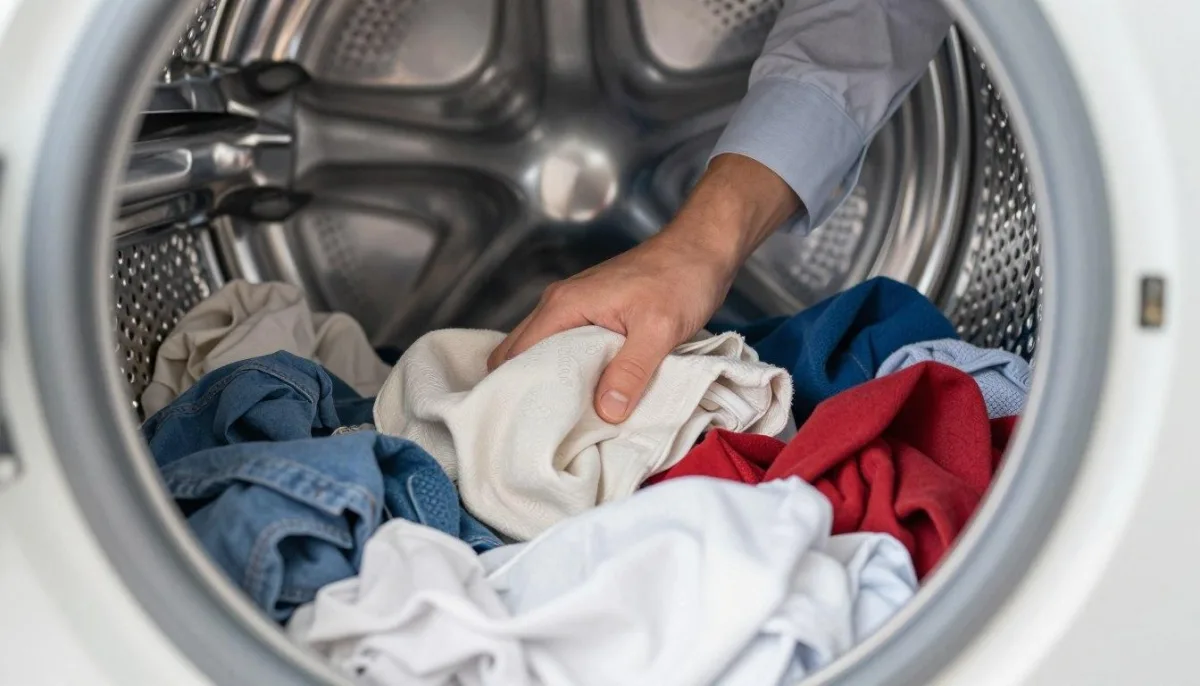
This issue is common when heavy items such as towels, blankets, bedding, or individual bulky garments collect on one side of the drum.
Samsung's current support documentation states that Ub or UE error codes indicate an unbalanced load during spinning and recommends redistributing the laundry and checking that the machine is level.
Insights on Auto-Redistribution Features
Many modern washing machines attempt to redistribute an unbalanced load automatically before reaching full spin speed.
The drum may rotate slowly in different directions or repeatedly attempt to balance the load before continuing.
This can extend the cycle, and some machines may reduce spin speed or display an imbalance code when they cannot achieve a safe distribution.
Techniques for Manual Load Adjustment
If the washer has safely stopped and the door or lid can be opened normally, separate tangled items and redistribute heavy garments more evenly.
Avoid washing one very heavy item by itself where your manufacturer's instructions recommend balancing it with other suitable items.
Also check that the washing machine is level on a stable surface.
If the machine reduces its final spin speed but otherwise completes the cycle, load imbalance may have influenced the spin performance.
Evaluating Drum Bearings and Pulleys
Excessive noise during the spin cycle can indicate underlying issues with drum bearings.
If a washer produces loud rumbling or grinding sounds, it may suggest that the bearings are damaged. This noise often becomes more noticeable as drum speed increases.
Signs of possible bearing damage include:
- Excessive rumbling or grinding sounds
- Wobbling of the drum during operation
- Rough manual movement of the drum when the washer is unplugged
Inspecting accessible pulleys may also help identify drum-rotation problems.
Look for:
- Obstructions that may hinder movement
- Alignment issues
- Visible cracks or looseness where components can be safely inspected
Replacing drum bearings generally requires removing and substantially disassembling the drum. This process can be complex and is not recommended for inexperienced DIYers.
Repair cost varies considerably by washer construction because some models allow individual bearing replacement while others require more extensive drum or tub work.
Persistent bearing noise should be addressed promptly. Continued operation with damaged bearings may lead to additional damage involving the drum, pulley, seal, or cabinet.
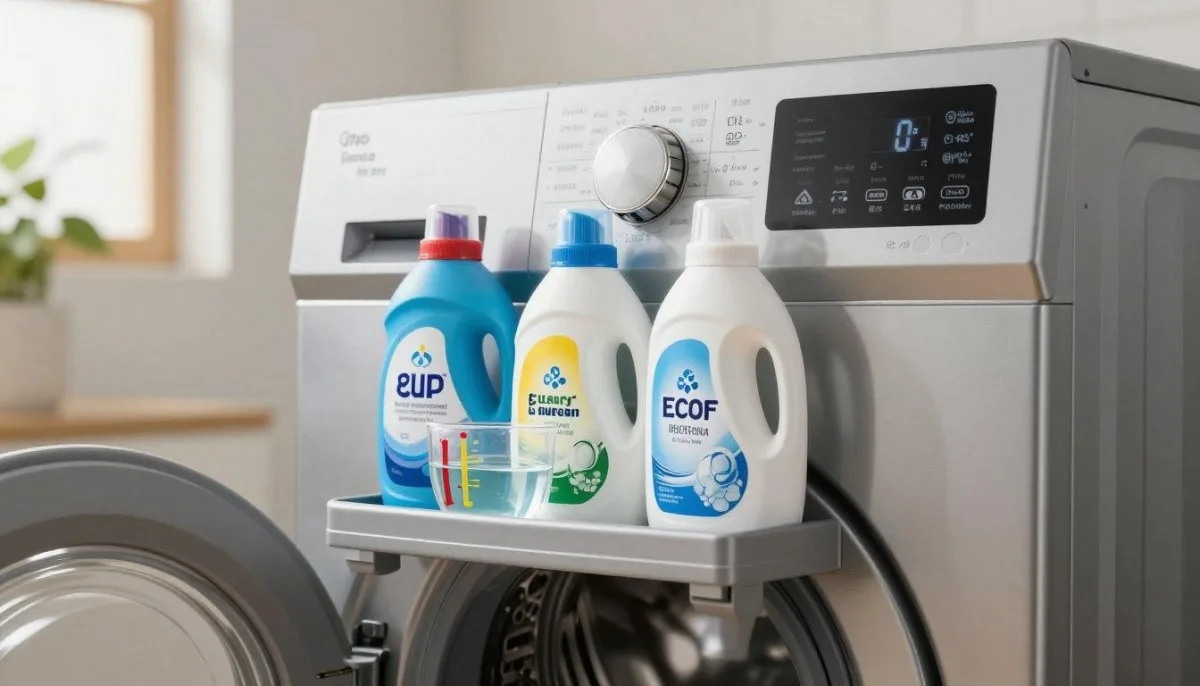
Optimizing Washing Machine Performance with Correct Detergent and Water Levels
Optimal performance in laundry appliances often hinges on the right balance of detergent and water.
Using the correct amount of detergent is crucial for effective cleaning and normal washer operation.
Excessive detergent can lead to:
- Residue buildup on clothes and components
- Excessive suds
- Longer wash cycles
- Drainage complications
- Reduced final spin performance on some machines
GE Appliances notes that oversudsing from too much detergent can reduce final spin speed and leave clothes wetter after the cycle. See GE Appliances guidance on wet clothes and oversudsing.
It is essential to follow the manufacturer's instructions regarding detergent type and dosage, especially for high-efficiency washers.
Correct water levels are also important. Depending on the appliance, water may be manually selected or automatically determined by sensors. The goal is to balance effective washing with proper rinsing, draining, and spinning.
Some GE Profile models also use automatic detergent-dispensing technologies designed to manage detergent delivery efficiently. The exact feature name and operation vary by model.
Applying Preventative Maintenance Strategies
Maintaining a washing machine is essential for long-lasting performance. Regular upkeep can significantly enhance the efficiency of laundry appliances.
Preventative maintenance should include:
- Cleaning user-serviceable drain or debris filters at the interval recommended for your washer
- Checking hoses for leaks, kinks, or restrictions
- Balancing loads to reduce vibration and strain
- Keeping the washer level on a stable surface
- Using the correct detergent type and quantity
- Checking the door seal and drum for trapped objects
- Retaining purchase, model, service, and warranty documentation
The original draft also referenced Speed Queen's long-life testing. Speed Queen currently states that its TR7 washer is built for 25 years of life in the average home, while actual product life naturally depends on use and maintenance.
Some GE Profile washers likewise advertise limited 10-year motor coverage, although warranty terms depend on the exact model and region.
By following a consistent maintenance routine, users can reduce avoidable strain on the washing machine and identify developing problems earlier.
For more Dubai-specific maintenance and fault patterns, see The Washing Machine Problems Every Dubai Household Eventually Faces.
When to Call a UAE Technician for Professional Help
Recognizing when professional help is needed can save time and improve safety.
UAE residents should consider contacting a qualified appliance technician when:
- There is a burning smell.
- Exposed or damaged wiring is visible.
- The appliance is leaking heavily.
- Electrical faults repeatedly interrupt operation.
- The machine trips a breaker.
- Grinding or severe mechanical noise persists.
- The washer contains standing water despite basic drainage checks.
Professional service is especially appropriate for:
- Motor problems
- Transmission-related faults
- Control-board diagnosis
- Bearing replacement
- Drum or tub disassembly
- Electrical wiring faults
- Complex door-lock problems
A technician should verify the diagnosis, confirm replacement-part compatibility, explain whether repair is economically sensible, and provide a quote before major work proceeds.
If those warning signs are present, Super Fix's dedicated washing machine repair in Dubai service is the most relevant commercial destination for this article. Super Fix's washing-machine service covers drainage, belt, motor, drum, sensor, and electronic-control issues.
The original draft promoted Don's Appliances in Pittsburgh at this point. I have removed that competitor reference because it is not relevant to a UAE-focused Super Fix Appliances article. The source reference appears here.
Conclusion
Washing machines can experience various challenges that affect their performance. Key areas to inspect include load balance, drainage, safety switches, belts, couplings, clutches, motors, and bearings.
Often, simply removing excess laundry, redistributing an unbalanced load, or cleaning an accessible blocked filter can resolve the problem without extensive repair.
However, persistent grinding noises, burning smells, standing water, failed door locks, control-board symptoms, and major mechanical faults suggest that professional diagnosis is necessary.
Regular maintenance, including filter cleaning, hose inspection, keeping the washer level, and using the correct detergent, can enhance overall performance and reduce preventable spin problems.
When repair requirements become extensive, compare the expected repair cost, washer age, warranty coverage, parts availability, and replacement value before making a decision.
For persistent spin-cycle problems in Dubai, Super Fix Appliances provides professional appliance repair, with a dedicated washing-machine service for both front-load and top-load models.
You can also review the earlier Super Fix guide Is Your Washing Machine Not Spinning? Troubleshooting Tips for additional symptom-based troubleshooting.
Frequently Asked Questions
What are the common reasons for a washer not spinning?
Several factors can cause a washer to fail during the spin cycle, including an overloaded or unbalanced load, a faulty lid switch or door lock, drive-belt problems, motor faults, blocked drainage, or a clogged pump filter.
How can one tell if the lid switch is faulty?
A faulty lid switch may prevent a top-load washer from starting the spin cycle even when the lid appears closed.
Check for visible damage or misalignment only after disconnecting power. Electrical switch testing should be performed only by someone who understands safe de-energized testing procedures.
What should be checked if the drum is not spinning?
Start with the simplest checks: load balance, selected cycle, standing water, drain hose, and user-serviceable filters. If these are normal, the drive belt, motor coupling, motor, clutch, control system, or bearings may require further diagnosis.
How can overloaded loads affect washing performance?
Overloading can strain the washer and create an unbalanced load. The appliance may reduce spin speed or stop spinning to protect itself from excessive vibration and mechanical stress.
What tools are needed for basic washing machine repairs?
Basic inspection may require a screwdriver, pliers, flashlight, protective gloves, towels, and a shallow container.
A multimeter should only be used by someone trained to perform the specific test safely. Live electrical testing should be left to a professional technician.
When is it advisable to seek professional help?
Seek professional help when the problem involves electrical components, damaged wiring, the motor, bearings, control board, transmission, substantial leakage, burning smells, or multiple possible faults.
How can proper detergent use impact washing performance?
Using the correct detergent type and quantity helps reduce residue and excessive suds. Too much detergent can interfere with rinsing and, on some washers, slow the final spin cycle.
What maintenance practices can help prevent spin issues?
Regular maintenance includes cleaning user-serviceable filters, checking hoses for restrictions or leaks, keeping the appliance level, balancing loads properly, and following the manufacturer's detergent and maintenance instructions.