




Washing Machine and Dryer Stack: Installation, Safety and Maintenance Guide
Imagine stepping into your laundry room and seeing a perfectly organized space. It’s not just about aesthetics; it’s about efficiency and safety. For many homes in the UAE, maximizing laundry capacity is essential. A well-placed unit can save precious space while ensuring your laundry needs are met.
When considering a stacked unit, it’s vital to understand the importance of proper installation. Bosch recommends professional assistance for a reason. The weight of a filled appliance can be daunting, and safety should always come first. Placing the dryer above the washer is not just a design choice; it’s a necessity for balance and stability.
This guide will walk you through essential measurements, necessary tools, and installation steps. You’ll learn how to ensure compatibility and control vibrations effectively. If a stacked setup isn’t suitable for your space, we’ll also explore combination units as a practical alternative.
Overview of Washing Machine and Dryer Stacks
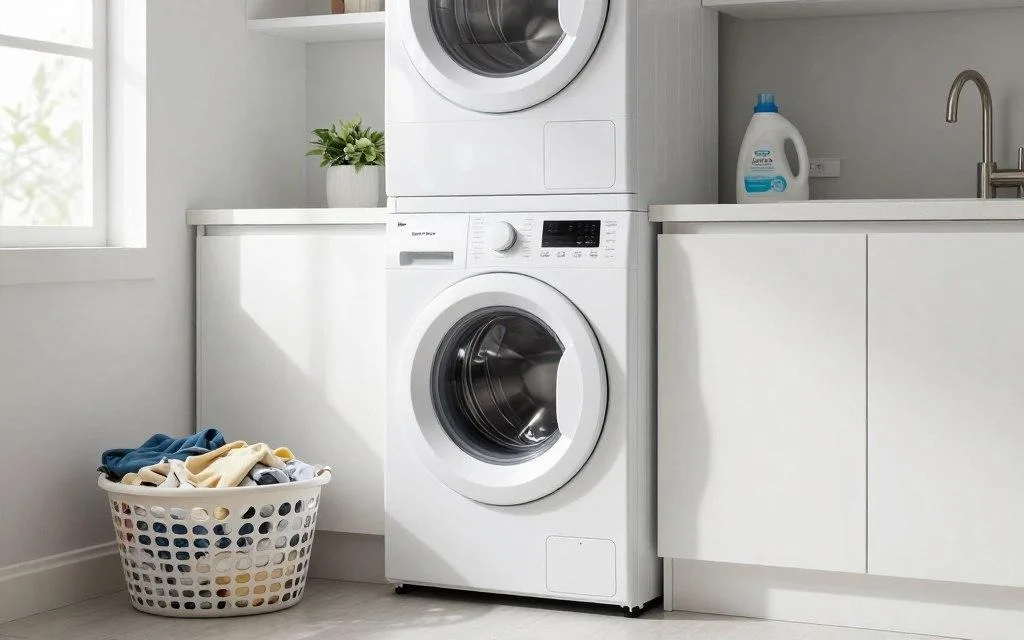
Creating an organized laundry space enhances both efficiency and comfort. A laundry stack consists of a compatible front-load washer that supports a dryer through an approved frame or stacking system. Bosch identifies its appliances as stackable, but it’s crucial for users to verify each model’s manual for specific guidelines.
Standard washers and dryers typically measure 60 centimeters in width and 85 centimeters in height. When stacked, this pair occupies approximately 0.6 cubic meters, making it an ideal solution for compact utility rooms in the UAE.
To ensure proper installation, allow an additional 50-80 millimeters on each side for cords, vents, and heat dissipation. This space is vital for maintaining optimal appliance performance.
|
Dimension |
Measurement |
Purpose |
|
Width |
60 cm |
Standard appliance size |
|
Height |
85 cm |
Standard appliance size |
|
Stacked Volume |
0.6 m³ |
Space efficiency |
|
Side Clearance |
50-80 mm |
Ventilation and heat escape |
For more information on compatible models, visit Bosch's official page.
Benefits of Stacking Appliances for UAE Homes
Maximizing space in a laundry area can lead to a more functional and organized home. Vertical stacking of appliances can free up valuable floor space, particularly in UAE apartments where every inch counts. A 27-inch-wide front-load pair can fit snugly in narrow utility zones, allowing for additional storage options.
Samsung’s SKK-8K stacking kit is specifically designed for most 27-inch-wide Samsung front-load laundry pairs. This gives homeowners a defined space-saving solution. Additionally, Samsung Bespoke kits come in stylish finishes like Brushed Black, Brushed Navy, Silver Steel, and Forest Green, enhancing the aesthetic appeal of your laundry area.
Another convenience is offered by the Samsung MultiControl kit, which allows users to control the compatible dryer directly from the washer. This feature simplifies the laundry process without taking up extra floor area. For homes with limited vertical clearance, combination washer dryers provide a compact solution by integrating both washing and drying functions into one unit.
| Feature | Description | Benefit |
|---|---|---|
| Vertical Stacking | Utilizes vertical space | Increases storage options |
| Samsung SKK-8K Kit | Fits 27-inch Samsung pairs | Defined space-saving option |
| Bespoke Finishes | Available in various colors | Enhances aesthetic appeal |
| MultiControl Kit | Control dryer from washer | Improves convenience |
| Combination Units | Washing and drying in one | Compact solution for small spaces |
Safety Precautions Before Stacking
Taking precautions before installation can prevent accidents and ensure a smooth process. Proper safety measures are vital when preparing to stack appliances. Understanding the manufacturer’s guidelines is the first step toward a safe installation.
Before work begins, installers should:
-
Read both appliance manuals and stacking-kit instructions, as each kit contains model-specific steps.
-
Unplug both appliances to reduce the risk of electric shock during installation.
-
Prepare a checklist that includes brackets, screws, instructions, a screwdriver, protective footwear, and a capable helper.
-
Consider professional installation to avoid injuries when moving or stacking appliances.
-
Obtain any missing components from the local manufacturer service center instead of using improvised hardware.
Essential Tools and Components
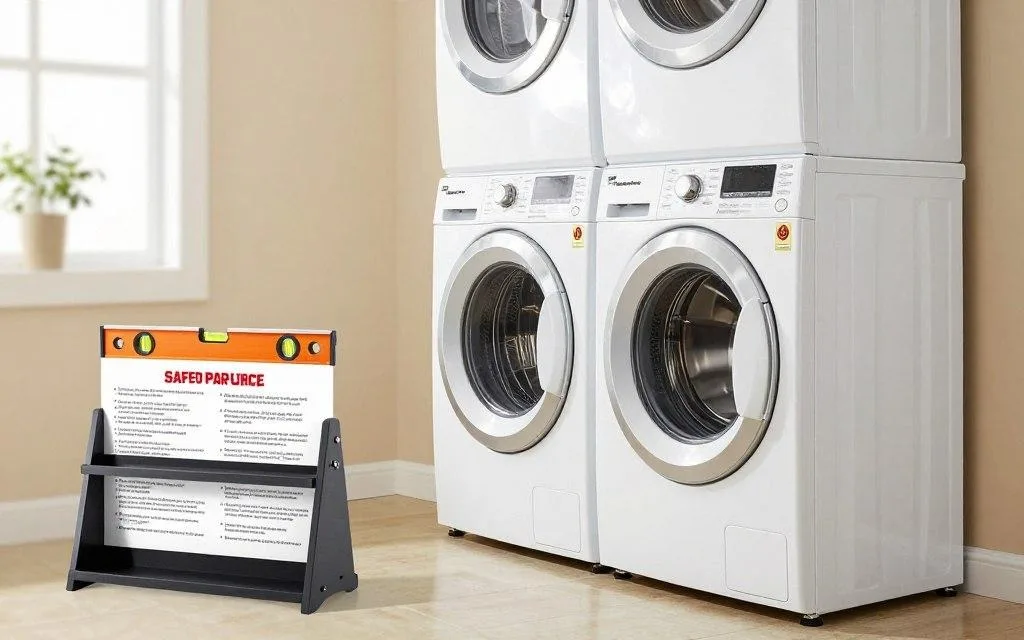
A well-equipped laundry setup begins with the right tools and components. To ensure a successful installation, specific items are essential. Among these are a spirit level, stacking kit, anti-slip strips, drill, screwdriver, trusted helper, and an optional fastening strap.
The stacking kit typically contains a frame and fixing elements, such as screws, to support the weight of the upper appliance. It is crucial to follow the manufacturer’s guidelines when using these kits.
Anti-slip strips should be selected to match the dryer feet. They must be applied to a clean, dry surface to provide the best grip. Additionally, placing rubber caps under the washer feet can help absorb vibrations and reduce noise on hard surfaces.
Before starting, it’s important to distinguish between manufacturer-supplied brackets and general tools. This helps installers identify any missing components from the kit.
Preparing Your Space and Checking Appliance Compatibility
A well-prepared laundry area can significantly improve your appliance performance. Ensuring that both appliances align from top to bottom is crucial for stability. This means checking that their widths, depths, controls, and mounting points match perfectly.
For example, Samsung’s SKK-8K kits are designed to fit most 27-inch-wide front-load pairs. However, users must verify compatibility with their specific models. Additionally, the floor must be hard, level, and strong enough to support the weight and movement of the appliances.
Space planning is essential. You should account for the appliance heights plus an additional 50-80 millimeters on each side. This extra space is necessary for ventilation, cords, and heat escape. The area should also provide accessible power, water, drainage, and dryer ventilation without forcing hoses or cables into sharp bends.
For a related setup checklist, see our washing machine installation guide for UAE homes.
| Consideration | Details | Importance |
|---|---|---|
| Alignment | Ensure appliances align correctly | Stability and safety |
| Compatibility | Check model specifications | Prevent installation issues |
| Floor Strength | Use a hard, level surface | Support weight and movement |
| Space Planning | Include extra space for ventilation | Maintain optimal performance |
Step-by-Step Installation Process
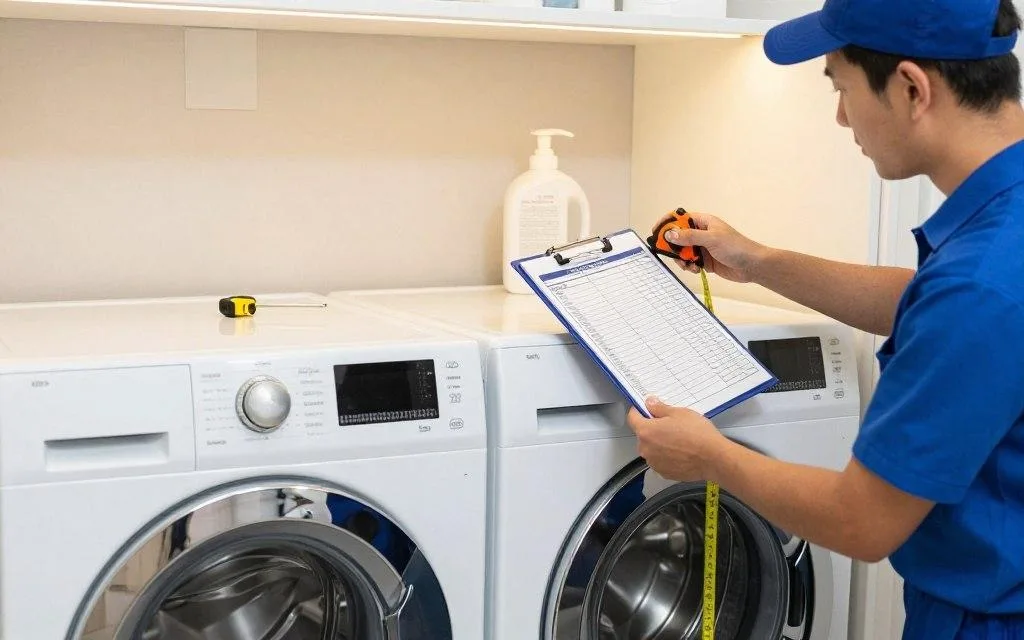
Setting up your laundry space requires careful planning and execution. Proper preparation can significantly impact the installation of your appliances. Begin by inspecting the units, unplugging them, and cleaning the contact surfaces. Confirm that the washer is positioned on a level floor.
Pre-Installation Preparation
Before installing, ensure the washer is leveled using a spirit level. A leaning base can destabilize the entire tower. Remember, the dryer must always be placed above the washer, as Bosch identifies the water-filled washer as the safer floor-level appliance.
-
At least two capable adults should lift the dryer, which typically weighs between 45-60 kilograms, ensuring they support every corner.
-
Preparation also involves confirming that the washer stands in its final position before proceeding with the installation.
Assembly and Final Inspection
After assembly, conduct a final inspection. Confirm that all screws are tightened, the alignment is straight, and that hoses are unobstructed. Check power connections and ensure safe ventilation before operating the appliances.
"A well-prepared installation leads to optimal performance and safety."
Installing and Securing the Stacking Kit
Transforming your laundry area into a well-organized space can significantly boost its functionality. Proper assembly of the stacking kit is essential for safety and efficiency. This kit typically includes a frame and fixing elements like screws, designed to securely hold the upper appliance in place.
To begin, the installer will follow the kit manual for assembly, ensuring that all components are correctly positioned. This avoids reliance on universal drilling positions, which may not be suitable.
Proper Kit Assembly
-
Anti-slip strips should be placed on clean, dry corners of the washer where the dryer feet will rest. This limits unwanted movement during operation.
-
Carefully lower the dryer onto the frame, aligning its feet properly. Ensure that the rear brackets are attached to both appliances for added stability.
-
A fastening strap can be installed to provide additional security for a freestanding unit. This strap should be tightened correctly through the kit.
-
Before moving the stacked appliances into their final position, Samsung advises checking that every screw is tight. This step is crucial for preventing accidents.
Ensuring Anti-Slip and Vibration Control
Using anti-slip strips not only prevents movement but also enhances the overall stability of the stacked setup. By taking these precautions, homeowners can enjoy a safe and efficient laundry experience.
Leveling and Stabilizing the Washing Machine
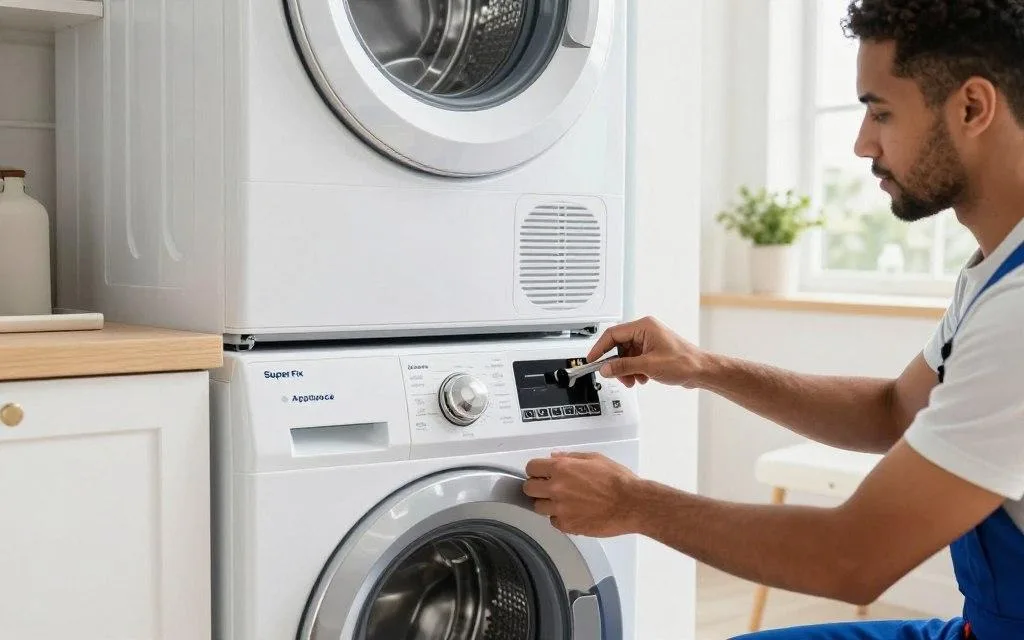
Ensuring your laundry setup is stable is crucial for both safety and performance. A level appliance not only operates more efficiently but also minimizes the risk of vibrations that can lead to damage over time. Before lifting the dryer into position, it is essential to check the washer's level.
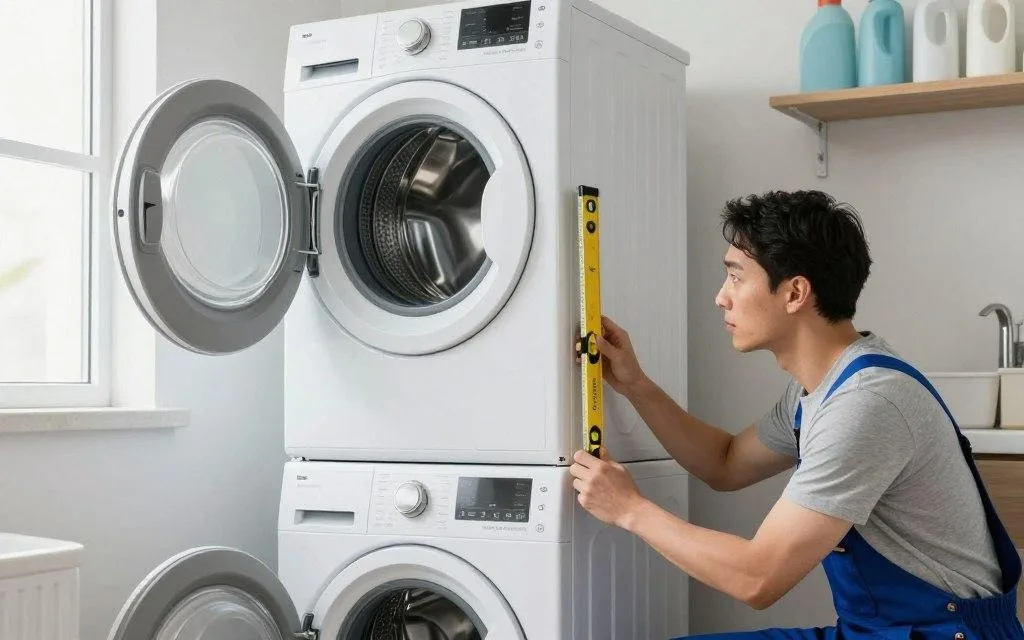
The spirit level should be placed across the washer’s top surface. A bubble centered between the two lines indicates level alignment, according to Bosch’s installation guidance. If the bubble moves toward one side, that side is higher, so the opposite foot should be adjusted upward.
It’s important to check the level from both front to back and side to side. After tightening the feet, retest to ensure stability. Additionally, using rubber caps under the washer feet can help stabilize hard tile or concrete floors after leveling has been completed.
| Step | Action | Outcome |
|---|---|---|
| 1 | Place spirit level on top | Check for level alignment |
| 2 | Adjust higher foot | Achieve level balance |
| 3 | Retest after adjustments | Confirm stability |
| 4 | Add rubber caps | Enhance floor stability |
Handling and Lifting the Dryer Safely
Handling heavy appliances requires careful planning and teamwork. A clothes dryer can weigh between 45-60 kilograms, making it essential to have a solid lifting strategy. Bosch recommends at least two capable individuals for this task to ensure safety and efficiency.
When lifting, each person should squat down, keeping their backs straight and gripping the appliance from below. This method prevents strain and reduces the risk of injury. It's crucial to lift together rather than pulling the unit by its doors or controls.
Wearing protective footwear is also important, as manufacturers like Samsung warn about injury risks during appliance movement. Bosch emphasizes that only experienced personnel should lift the dryer onto the washer, using coordinated teamwork to maintain stability.
-
Always plan a clear route before lifting.
-
Lift from below while squatting to control the weight.
-
Keep your back straight to avoid injury.
-
Condenser dryers can be transported on their side, but heat-pump dryers should remain upright.

Advanced Tips for Reducing Vibration and Noise
To achieve a quieter laundry experience, implementing specific strategies can make a significant difference. Rubber caps placed beneath the washer feet can absorb vibrations and dampen noise, especially on concrete or tile floors. This simple addition helps minimize movement transmitted through the stacked structure.
Heavy bulk loads, such as duvets, may create uneven spin forces. It’s essential not to overload the washer beyond its rated capacity. Splitting heavy laundry into smaller portions can significantly reduce vibration and improve stability during high-speed spin cycles.
After several test cycles, the installer should confirm that the washer remains level. Movement during operation can reveal issues with the floor or appliance feet. Additionally, if noise suddenly increases after installation, it may indicate loose brackets, an unbalanced load, or that the dryer is not seated correctly.
If excessive washer movement persists, Super Fix lists washing machine repair services in its Dubai appliance directory. For dryer noise, heating faults, or vibration problems, see its dryer repair service.
Maintenance Tips for Long-Lasting Appliance Performance
Regular upkeep is essential for maintaining the performance of laundry appliances. Routine cleaning and inspections can help prevent issues that might arise over time. Keeping these units in good condition ensures they operate efficiently and last longer.
Before stacking, it’s wise to deep-clean both appliances. The rear and ventilation areas of the dryer can become hard to access later. Regular checks are necessary to keep everything running smoothly.
Routine Cleaning and Inspections
-
Both appliances should be deep-cleaned before stacking.
-
Check the dryer vent and surrounding area regularly to prevent airflow restrictions.
-
Inspect hoses, cords, brackets, and screws for any signs of wear or damage.
-
Load washing drums evenly, avoiding overloading to protect performance.
-
Promptly replace broken parts to maintain energy efficiency and reduce repair costs.
| Maintenance Task | Frequency | Purpose |
|---|---|---|
| Deep Cleaning | Before stacking | Ensure accessibility and performance |
| Vent Check | Monthly | Prevent airflow restrictions |
| Inspection of Components | Every 3 months | Identify wear and tear |
| Load Balancing | Every use | Protect performance |
Washing Machine and Dryer Stack: Key Installation and Safety Considerations
Creating a functional laundry area requires thoughtful planning and attention to detail. To ensure a safe and effective setup, several key factors must be considered. Standard appliances typically measure 60 centimeters in width and 85 centimeters in height. When stacked, they occupy around 0.6 cubic meters of space.
Before installation, make sure to leave an extra 50-80 millimeters on each side for cords, vents, and heat dissipation. This extra space is crucial for optimal performance. It's also important to use a stacking kit, such as the Samsung SKK-8K, which fits most 27-inch-wide front-load pairs.
When lifting the dryer, remember that it weighs between 45-60 kilograms. Bosch recommends at least two people to safely lift the unit. This teamwork is essential for maintaining control and preventing accidents.
After placing the appliances, conduct a final inspection. Ensure all screws are tightened, the feet are level, and that there are no obstructions in the vents. Following these guidelines will help create a safe and efficient laundry setup.
| Consideration | Details | Importance |
|---|---|---|
| Dimensions | 60 cm width, 85 cm height | Standard size for compatibility |
| Space Requirement | 0.6 m³ when stacked | Efficient use of space |
| Side Clearance | 50-80 mm | Ventilation and heat escape |
| Weight | 45-60 kg | Requires at least two people to lift |
Troubleshooting Common Stacking Issues
Common issues can arise when stacking appliances, requiring prompt attention. Identifying these problems early can prevent further complications and ensure your laundry area operates smoothly.
One common concern is stability. A wobbling stack should be stopped immediately. The installer must check for proper leveling, loose feet, missing brackets, and correct stacking-kit assembly. If the washer is not level, it can cause excessive movement during operation.
Identifying and Correcting Stability Problems
Excessive movement can result from heavy loads or duvets. Users should redistribute laundry and avoid overfilling the drum. This adjustment can significantly reduce vibrations and improve overall stability.
Addressing Ventilation and Overload Concerns
Restricted airflow may indicate dust buildup around the dryer vent. Cleaning is essential to ensure unobstructed exhaust space. Remember, preserving an additional 50-80 millimeters on each side is vital for ventilation and heat escape.
If instability continues after adjustments, the appliances should remain unused. A qualified technician should inspect the floor, kit, and mounting points to ensure safety and performance.
Conclusion
Envision a laundry area that seamlessly combines efficiency with safety. A safe stacked arrangement starts with compatible front-load appliances, an approved stacking kit, and a level washer. Adequate ventilation is also crucial for optimal performance.
The dryer must always remain above the washer. Bosch’s guidance on the 45-60-kilogram weight of the dryer emphasizes the importance of coordinated lifting and, when necessary, professional assistance.
Correct dimensions, including approximately 50-80 millimeters of side clearance, help protect cords, vents, airflow, and heat dissipation. Regular cleaning, balanced loads, secure brackets, rubber caps, and vent inspections contribute to stable and quiet operation.
For UAE households that lack suitable vertical clearance, a combination washer dryer serves as an excellent alternative space-saving solution. For any installation questions or support, Bosch customers can reach out through their support number, 15196.
For faults affecting existing laundry appliances in Dubai, contact Super Fix Appliances or book a repair to request a technician’s assessment.
FAQ
What is a stacking kit, and why is it important?
A stacking kit is a set of brackets and supports designed to securely hold a washer and dryer on top of each other. It is essential for maximizing space and ensuring the appliances are stable during operation.
How do I know if my appliances are compatible for stacking?
Check the manufacturer's specifications for both the washer and dryer. They should be front-loading models, and the stacking kit must be compatible with both units.
What safety precautions should I take before starting the installation?
Always refer to the manufacturer guidelines, use the recommended tools, and ensure at least two people are available to lift the appliances safely. Additionally, wear safety gear to prevent injuries.
Can I stack my appliances without a stacking kit?
It is not recommended to stack appliances without a proper stacking kit, as this can lead to instability, increased noise, and potential damage to the units.
What tools do I need for the installation process?
Essential tools include a screwdriver, a spirit level, and any specific tools mentioned in the stacking kit instructions. Anti-slip strips may also be useful for added stability.
How can I reduce vibration and noise from my stacked appliances?
Ensure that the appliances are leveled correctly using a spirit level. Additionally, placing anti-slip mats underneath can help absorb vibrations and reduce noise.
What maintenance should I perform on my stacked appliances?
Regularly clean the lint filter, check hoses for wear, and inspect the stacking kit for any signs of wear or loosening. Routine maintenance helps ensure long-lasting performance.
What should I do if my stacked appliances are unstable?
Check that the stacking kit is installed correctly and that the appliances are leveled. If issues persist, consult the manufacturer’s guidelines or a professional technician for assistance.
How can I safely lift and handle the dryer during installation?
Always use proper lifting techniques, such as bending at the knees and keeping the back straight. It is advisable to have at least two people to assist with lifting and positioning the dryer.