




Why Fridge Is Not Cooling: Causes, Fixes and Tips Guide
Have you ever wondered what could cause your refrigerator to fail at its primary job? This common appliance plays a crucial role in keeping food fresh and safe. When it struggles to maintain the right temperature, it can lead to food spoilage and waste.
In this guide, we will explore various reasons behind a refrigerator's failure to cool effectively. It's essential to address these issues promptly. The FDA recommends keeping refrigerators at 40°F (4°C) or below and freezers at 0°F (-18°C).
We will cover simple checks you can perform, such as inspecting the power source, temperature settings, and door seals. Additionally, we'll discuss more complex problems that may require professional assistance. From dirty components to faulty fans, understanding these causes can help you maintain optimal performance.
Join us as we navigate through the essential tips and fixes to ensure your appliance operates efficiently.
For households dealing with persistent refrigerator problems in Dubai, Super Fix Appliances provides professional home and kitchen appliance repair services across the city.
Key Takeaways
- Refrigerators should remain at 40°F (4°C) or below for safer food storage.
- Common checks include power sources, temperature controls, and door seals.
- Dirty components and blocked airflow can disrupt cooling.
- Professional help may be needed for complex issues like refrigerant, compressor, fan, or control faults.
- Persistent cooling problems should be diagnosed before food begins spoiling.
Understanding Refrigerator Cooling: Basics and Temperature Control
Understanding how a refrigerator maintains its cool is essential for effective food preservation. Refrigerators should remain at 40°F (4°C) or below to help keep food safe and fresh.
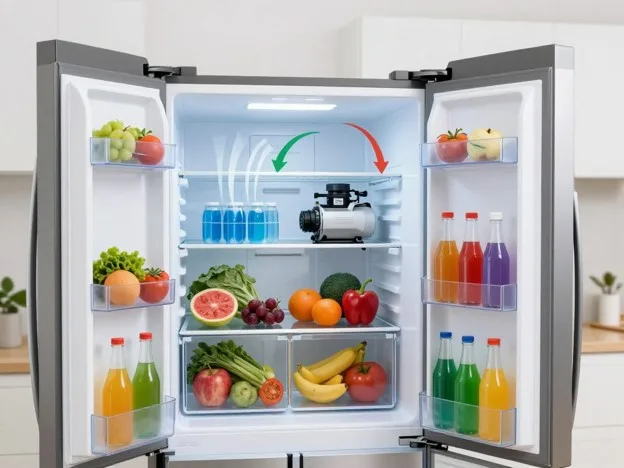
Proper airflow is crucial for the relationship between the refrigerator and freezer compartments. Cold air must circulate freely through air vents to maintain an even temperature. Blocked vents can disrupt this airflow, leading to uneven cooling.
Additionally, refrigerators need appropriate ventilation clearance around the cabinet. The exact amount depends on the make and model, so check the manufacturer's installation manual instead of relying on one universal clearance measurement. GE's refrigerator troubleshooting guidance likewise identifies proper air clearance, airflow, door closure, food loading, and settings among important cooling checks. GE refrigerator troubleshooting guidance
Newly installed refrigerators may also require time to stabilize, so immediate temperature judgments can be misleading.
Finally, very hot or otherwise unsuitable installation environments can affect cooling performance. Follow your appliance manufacturer's specified operating conditions.
Why Fridge Is Not Cooling: Common Causes Explored
Identifying the root causes of cooling issues in refrigerators is crucial for proper maintenance.
One major factor can be the condition of the condenser coils. When user-serviceable condenser coils become heavily coated with dust, they can struggle to release heat efficiently. This may force the refrigerator to work harder and affect cooling.
Not every refrigerator requires routine condenser-coil cleaning, so check the owner's manual before accessing or cleaning this area.
Blocked vents can also prevent cold air from circulating properly, resulting in uneven temperatures. Tall containers or food packages can obstruct airflow, increasing the risk of food spoilage.
Another concern is the condenser fan. If this fan is faulty, it may cause the compressor and condenser area to overheat. This places extra strain on the appliance, leading to potential failures.
Moreover, issues with the evaporator fan can leave the freezer cold while the fresh-food area warms up, disrupting the cooling process.
Diagnosing Component Failures and Malfunctions
Understanding the components that can fail in a refrigerator is vital for maintaining its efficiency.
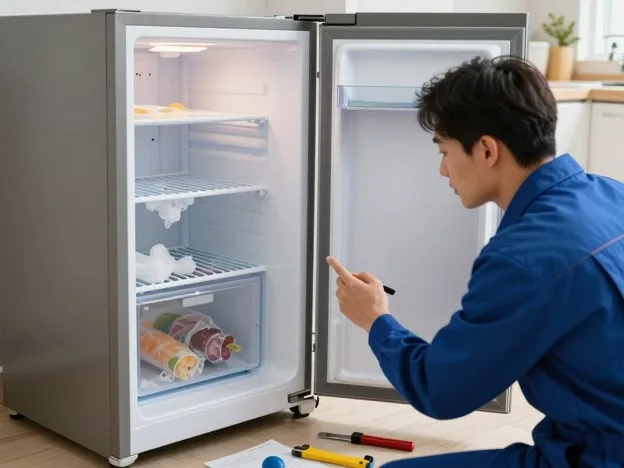
Evaluating the thermostat and temperature settings is a great starting point. If the refrigerator temperature does not change despite adjustments, the thermostat, sensor, or temperature-control system may require professional testing.
Next, refrigerant or sealed-system problems can lead to constant operation and poor cooling. Unusual sounds or frost patterns may accompany some refrigeration-system problems, but these symptoms alone do not confirm a refrigerant leak.
Such issues require professional diagnosis and repair, as sealed-system work should be handled by qualified technicians.
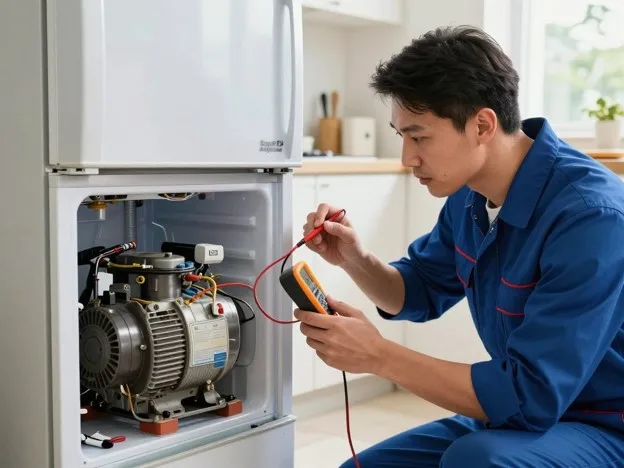
The refrigerator compressor plays a crucial role in the cooling process. When dirty coils, airflow problems, or fan failures occur, the compressor may become strained.
Additionally, control-board and circuit faults can interrupt cooling cycles, even if the appliance has power and the interior light operates.
If the cooling problem also comes with grinding, buzzing, rattling, or other unusual sounds, read the previous Super Fix guide Why Is My Fridge Making Loud Noises? Common Repair Solutions. It covers fan, compressor, ice-buildup, and related refrigerator noises.
Step-by-Step Fixes for Restoring Proper Cooling
Restoring optimal cooling in a refrigerator requires a systematic approach to diagnostics and repairs.
Start by checking the power supply and ensuring that the appliance is plugged in. Next, examine the temperature settings to confirm they are within the recommended range.
Ensure that the refrigerator door closes properly. A door that does not seal can let cold air escape, affecting temperature.
Additionally, inspect the interior for tall containers that may block air vents. Moving containers away from rear air outlets can allow for better airflow.
If your manufacturer's manual recommends condenser-coil cleaning and the coils are designed to be user accessible, unplug the refrigerator first and follow the model-specific cleaning instructions.
Do not assume every refrigerator uses the same reset procedure. If your owner's manual provides an electronic reset or diagnostic sequence, follow those instructions exactly.
If the refrigerator still struggles after these basic checks, professional diagnosis may be necessary. Super Fix's Refrigerator Repair Dubai service covers temperature fluctuations, thermostat and electronic-control faults, fan motors, defrost systems, door seals, refrigerant issues, compressors, and related cooling problems.
| Step | Action | Notes |
|---|---|---|
| 1 | Check Power Supply | Ensure the appliance is plugged in |
| 2 | Examine Temperature Settings | Confirm settings are within range |
| 3 | Inspect Door Seal | Ensure proper closure to retain cold air |
| 4 | Check Air Vents | Keep food away from cooling outlets |
| 5 | Check Condenser Maintenance | Follow the manufacturer's manual |
| 6 | Reset Only If Applicable | Use the model-specific procedure |

Maintenance and Preventative Tips for Reliable Performance
Keeping a refrigerator running smoothly requires regular maintenance. This practice not only supports the appliance's lifespan but also helps ensure efficient operation. A few simple steps can prevent major issues down the line.
Condenser maintenance requirements vary by model. Some refrigerators have coils that benefit from periodic cleaning, while others require little or no owner maintenance.
Check your refrigerator manual before cleaning them.
Additionally, it's important to check door gaskets, hinges, and air vents regularly. These components must function well to maintain proper sealing and circulation. Food containers should be positioned away from air outlets to allow cold air to flow evenly.
ENERGY STAR also recommends keeping refrigerator door seals airtight, minimizing unnecessary door opening, allowing air circulation around the appliance, and following the owner's manual when cleaning coils. ENERGY STAR refrigerator maintenance guidance
When persistent issues arise, such as strange noises or cooling failures, professional servicing may be necessary. Scheduling expert help can address problems beyond simple DIY fixes.
| Maintenance Task | Frequency | Notes |
|---|---|---|
| Check condenser requirements | Per manufacturer | Consult the appliance manual |
| Inspect door gaskets | Periodically | Ensure proper sealing |
| Check air vents | Periodically | Keep clear for even air distribution |
| Check refrigerator temperature | Regularly | Keep at 4°C or below |
| Professional servicing | As needed | For recurring cooling faults or noises |
For a broader appliance-maintenance perspective, you can also read Why Regular Dishwasher Services Are Essential for Longevity?, which is another published guide currently listed in the Super Fix blog archive.
Conclusion
In conclusion, a refrigerator that struggles to maintain its cool can lead to food safety concerns.
First, check the power, settings, airflow, installation clearance, and door seals. These initial steps can often help identify the problem.
Remember, a refrigerator should remain at 40°F (4°C) or below. If the appliance repeatedly fails to meet this benchmark, further investigation is necessary.
Dirty user-serviceable coils, malfunctioning fans, and other component failures require different diagnostic approaches. Always unplug the appliance before carrying out manufacturer-approved cleaning or maintenance around accessible electrical or mechanical components.
If cooling does not return after these checks, professional service may be required.
For refrigerator cooling problems in Dubai, Super Fix Appliances Refrigerator Repair Dubai provides troubleshooting and repair for residential and commercial refrigerators across Dubai.
Frequently Asked Questions
What causes a refrigerator to stop cooling effectively?
Several factors can lead to cooling issues, including incorrect settings, blocked air vents, door-seal problems, condenser issues, or malfunctioning fan motors. More complex causes can involve sensors, defrost components, electronic controls, refrigerant systems, or the compressor.
How can dirty condenser coils affect refrigerator performance?
On models with condenser coils that require cleaning, heavy dust and debris can interfere with heat release and reduce cooling efficiency. Always check your model's maintenance instructions first.
What are the ideal temperature settings for a refrigerator and freezer?
The refrigerator should remain at 40°F (4°C) or below, while the freezer should remain at 0°F (-18°C).
How can one check if the thermostat is functioning correctly?
Set the refrigerator to the recommended temperature and monitor the actual compartment temperature using an appliance thermometer. If the temperature remains incorrect despite reasonable adjustment and stabilization time, professional diagnosis may be needed.
What steps can be taken to clean condenser coils?
If the manufacturer states that your refrigerator has user-cleanable condenser coils, unplug the appliance and follow the cleaning procedure in the owner's manual. Do not remove sealed-system components or electrical assemblies.
How often should a refrigerator be serviced for optimal performance?
There is no universal annual-service rule for every refrigerator. Routine care should follow the manufacturer's recommendations, while professional servicing is appropriate when recurring cooling, noise, leakage, frost, or electrical problems appear.
What signs indicate that the evaporator fan might be malfunctioning?
Possible signs include unusual fan noises, a freezer that remains cold while the refrigerator becomes warm, poor airflow, or recurring frost buildup. These symptoms may require professional inspection.
Can temperature fluctuations affect food safety?
Yes. Temperature fluctuations that leave perishable food above safe refrigeration temperatures for too long can increase food-safety risk. FDA guidance recommends keeping refrigerators at 40°F (4°C) or below.